Why Self-Healing Waterproofing is Ideal for Coastal Buildings
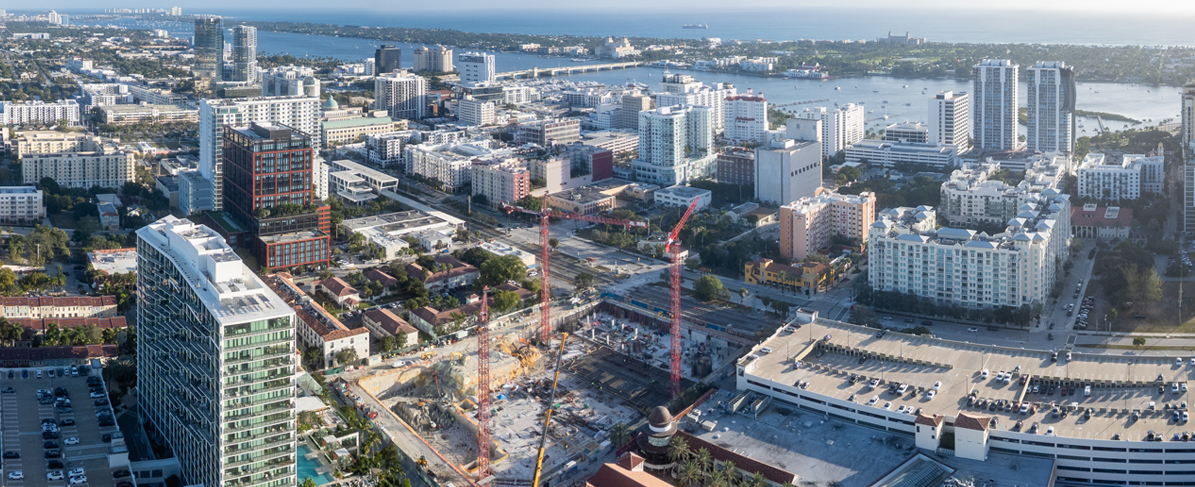
See how self-healing waterproofing systems, like TREMproof Amphibia, offer the redundancy and resiliency needed for the most challenging conditions of coastal building construction.

See how self-healing waterproofing systems, like TREMproof Amphibia, offer the redundancy and resiliency needed for the most challenging conditions of coastal building construction.
Waterproofing foundation walls of buildings in coastal areas with high water tables presents distinct architectural challenges. High hydrostatic pressure, corrosive saltwater and fluctuating water levels demand a robust and resilient below-grade waterproofing solution to protect the building's foundation. Traditional passive waterproofing methods can fail under these conditions, leading to costly water infiltration and structural damage. Alternatively, self-healing technologies offer a durable waterproof membrane for walls of basements and entire foundations with built-in redundancy and watertightness in even the most difficult environments.
If moisture below grade bypasses a waterproofing material, it quickly diminishes the efficacy of the concrete waterproofing system across the entire perimeter wall, allowing moisture in the soil to permeate the porous cementitious surface of the foundation or basement. From there, groundwater can enter the building far from the initial entry point, making leaks a nightmare to trace and repair. Water migration can even compromise the steel reinforcing of the concrete and therefore the structural integrity of the building if not properly addressed.
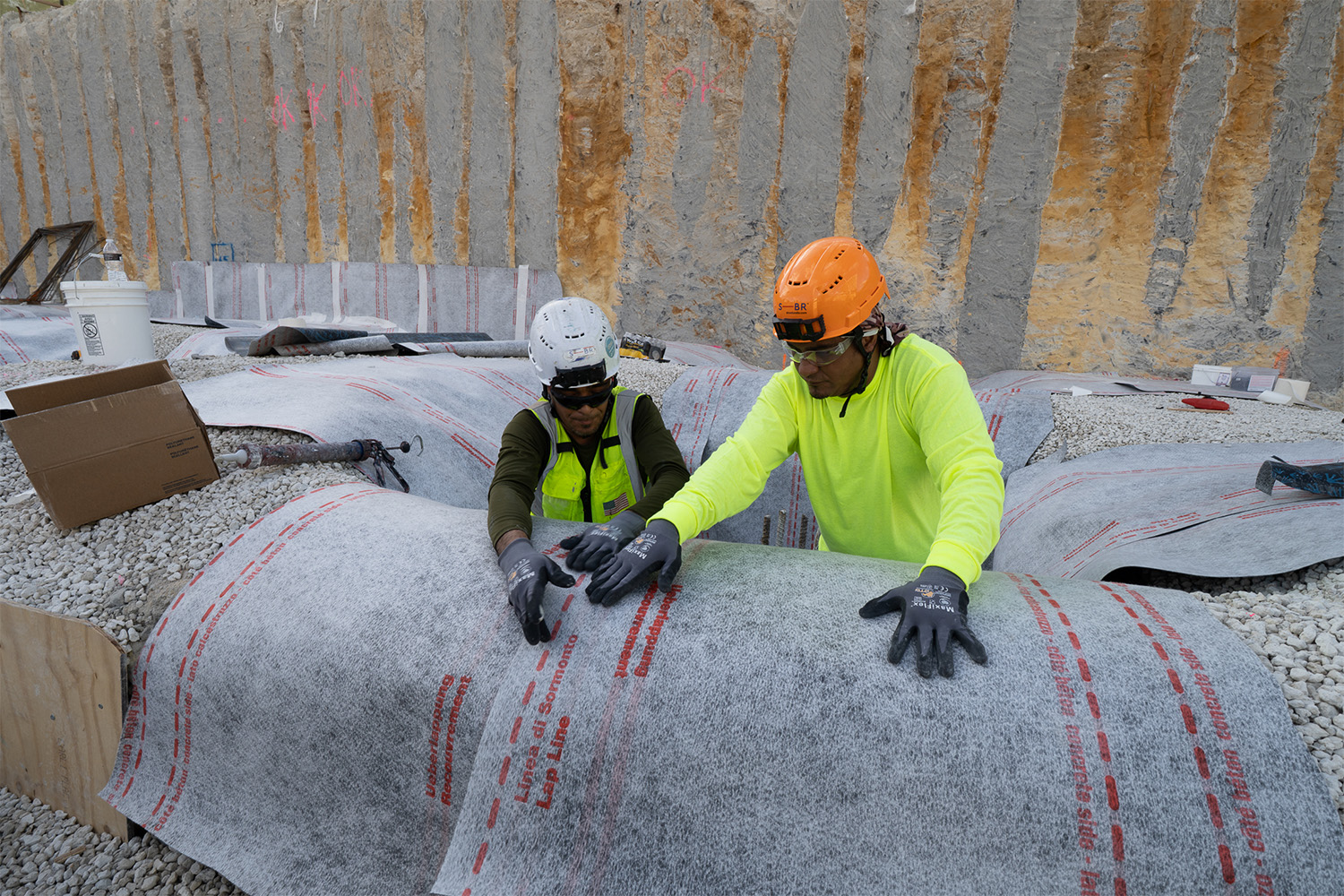
 At this point, the steel reinforcing and concrete has been placed and the waterproofing is permanently buried, so “it’s critical to get it right the first time because [with a] below grade system, you only have one chance, one time to do it right,” said Milton Ramirez, Director of Preconstruction for Structural Buildings and Restoration (SBR) out of Florida.
Moisture ingress can be caused by numerous factors including improper waterproofing installation, punctures to the membrane and inadequate adhesion or attachment of the waterproofing to the concrete substrate. After the waterproofing install, there are still a lot of trades working through the excavated area and careless material handling can damage the waterproofing. Even the backfilling process itself poses a risk, as sharp rocks and debris can puncture the waterproofing membrane. These openings create pathways for water intrusion that may go unnoticed until long after construction is complete and substantial damage has occurred.
Designing foundations for oceanfront buildings and structures near or below sea-level requires added attention to accommodate their unique environmental factors. While the specific circumstances vary coast to coast, these regions’ geology and hydrology, including soil composition, storm seasons and continual presence of groundwater, all impact building construction. Here are three subsequent challenges that are crucial to consider when choosing below-grade building materials for waterproofing concrete foundations.
Structures with a high water table are subject to constant inward pressure from groundwater. This pressure can force water through even the smallest imperfections in a waterproofing barrier, leading to leaks and moisture problems within the structure. Therefore, the below-grade waterproofing product chosen must be able to resist hydrostatic pressure for the decades-long lifespan of the building.
 2. Saltwater Corrosion
The high salinity of coastal groundwater and sea spray can be corrosive to some building materials. Salt can degrade conventional waterproofing materials and attack the reinforcing steel within concrete, compromising the structural integrity of the foundation over time if not properly protected.
Tidal shifts, seasonal changes and storm surges cause water tables to rise and fall. This dynamic movement stresses the waterproofing system and if damaged, can introduce moisture to previously dry areas of the concrete foundation.
explained Matt Cooper, who is based in South Florida and is the Business Development Specialist for below-grade waterproofing at Tremco CPG Inc. “We have rainwater during the summers where it rains every single day. We have salt and chlorides that attack our concrete and reinforcing steel. We have high groundwater tables that we have to deal with. All these factors, and many more, make it extremely difficult to build projects that are going to last in this environment.”
Typical foundation waterproofing membranes are passive, meaning they rely on physical barriers to prevent water infiltration. These materials, however, are heavily dependent on proper adhesion, installation and no damage post-installation to ensure their effectiveness. Alternatively, active sheet waterproofing membranes, such as Tremco’s TREMproof Amphibia, are engineered to counteract harsh conditions when waterproofing below slab on grade conditions, backfilled walls and blindside walls.
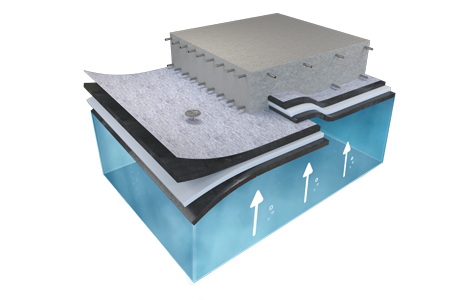
These hydro-reactive waterproofing materials respond to water in real time, absorbing any moisture and expanding to fill any holes or gaps that could lead to water intrusion. Therefore, even incidental punctures through the membrane will automatically form a watertight seal to prevent damage, providing durable protection far exceeding that of passive waterproofing systems.
TREMproof Amphibia has four layers that contribute to this unique self-sealing and self-healing waterproofing feature, including a watertight EPDM barrier, a hydrophilic core that swells on contact with water, an active overlap barrier and a non-woven fleece that mechanically bonds to concrete. If the outer layer is punctured and groundwater meets the active layer, it triggers a reaction, causing the material to form an impermeable gel that migrates to seal any breaches and close the system before moisture can reach the foundation. 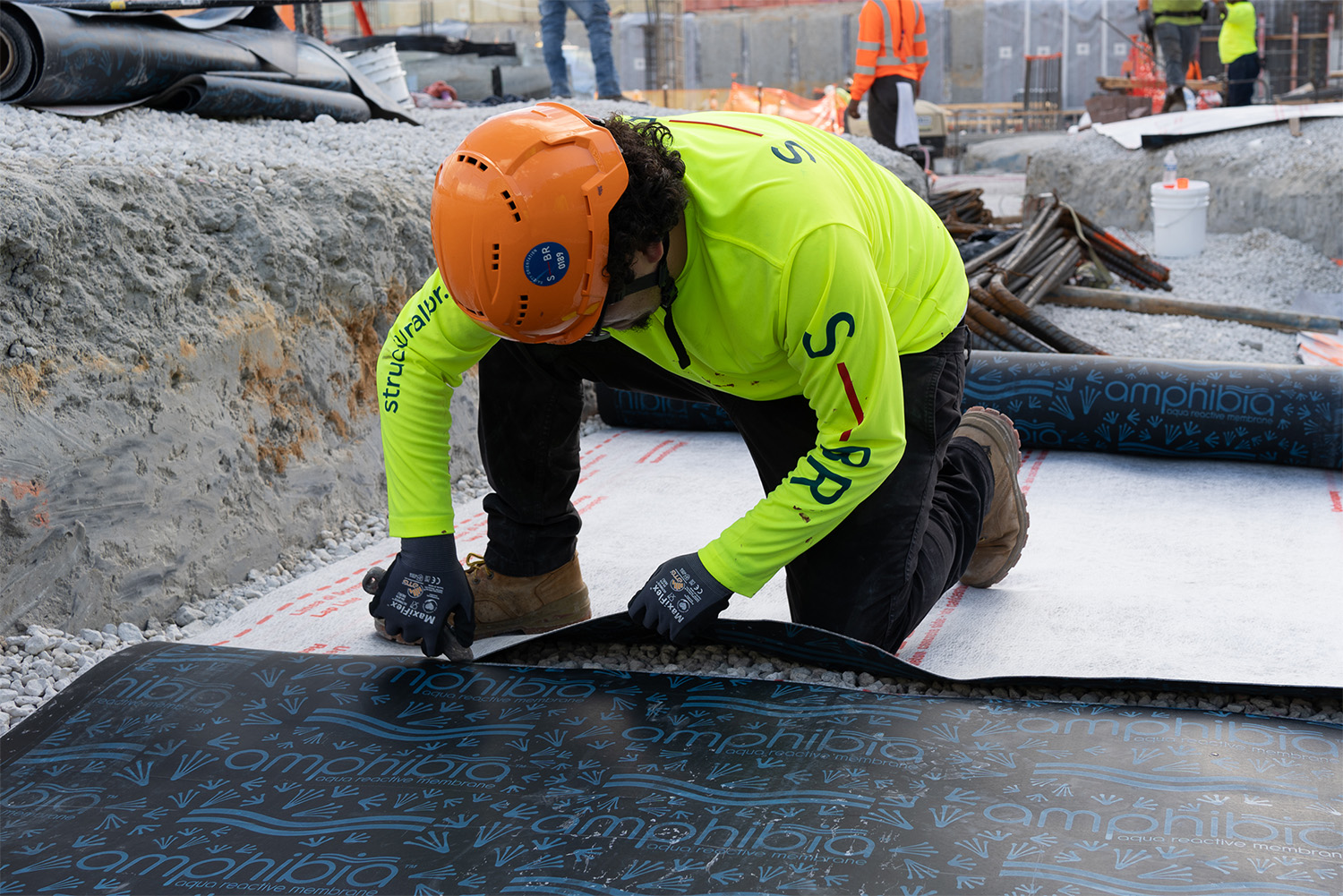 Amphibia resists aggressive natural ground agents and salt water, making it a high-performing exterior foundation water barrier for coastal properties, including 15 CityPlace office building in West Palm Beach, Florida. Combined with the durability from multiple redundant waterproofing layers, Amphibia effectively neutralizes common waterproofing risks, which translates into a longer service life for the entire structure and peace of mind for all the building stakeholders.
In coastal regions, building foundations face greater waterproofing concerns than in locations with lower water tables. However, many below-grade waterproofing products are not up to the challenge, leaving structures vulnerable to foundation leaks and expensive repairs. Unlike passive membranes, active waterproofing membranes are engineered to expand or self-seal with moisture, so their performance improves when exposed to water. These self-healing waterproofing systems, like TREMproof Amphibia, offer the necessary redundancy and resiliency to perform in the most challenging environments.