Selecting Sealants: 8 Considerations for Building Envelope Success
What is the best sealant for my project? This guide walks through 8 key factors to consider when choosing sealant and joinery products.

What is the best sealant for my project? This guide walks through 8 key factors to consider when choosing sealant and joinery products.
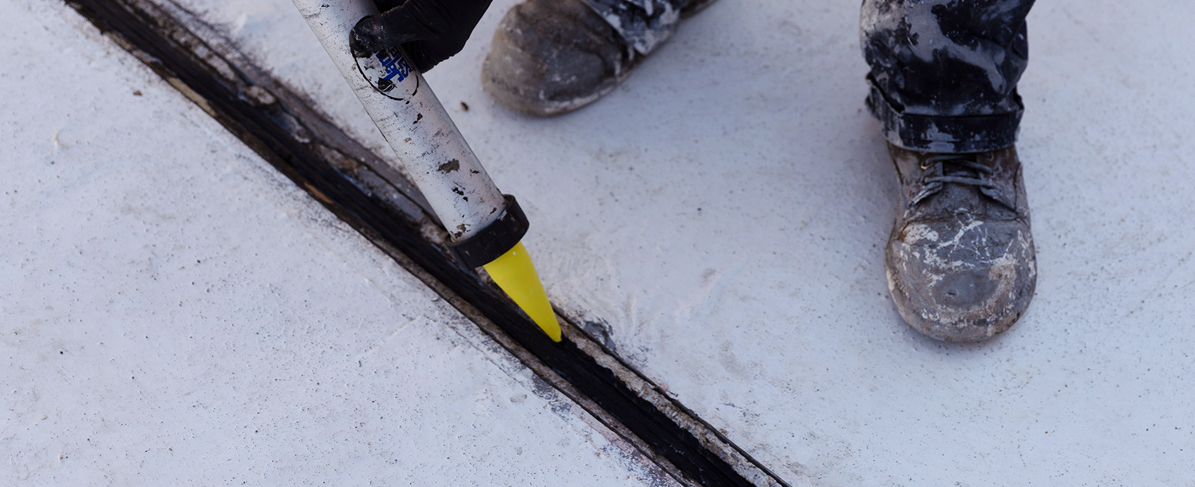
A majority of building envelope failures occur at the joinery between building materials. These transitions include expansion joints, window perimeters and glazing connections, like skylight sealing. Before product specification, it is important that design and construction professionals conduct research to understand the best sealant types for the joint conditions. Should you pick a urethane vs silicone or a liquid vs pre-compressed foam? There are lots of factors that play into the sealant decision.
Once you know the appropriate sealant technology, as long as the installers properly apply the products in the field, you can reduce callbacks, minimize the need for ongoing maintenance and ultimately improve the structure’s resilience, energy-efficiency and air- and water-tightness.
This guide walks through 8 key project-specific factors that must be accounted for in the sealant and joinery selection process to ensure they meet the application’s performance needs.
Here are 8 important jobsite conditions to evaluate in order to find the best sealant product for your application.
 Water Immersion
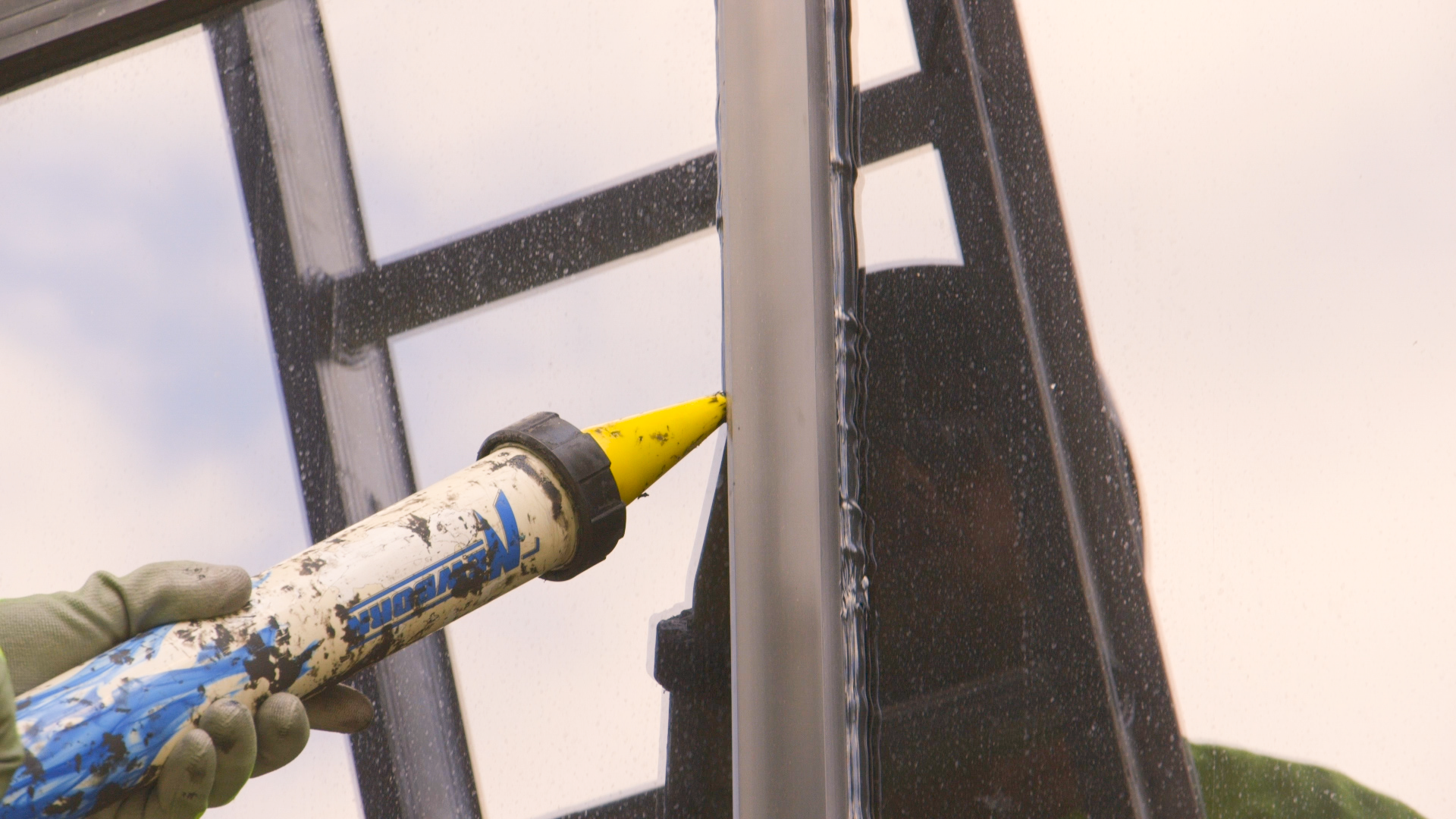
The first consideration for choosing a sealant is if and how long the joint will be exposed to liquids. If it will be in contact with chemicals or completely immersed in water, polyurethanes are recommended due to their robust nature and are considered a waterproof sealant. Silicone or hybrid materials can function well with incidental exposure to water, like rain or snow, but if you’re considering them for a fully submerged application, it is recommended to test the desired product under those conditions ahead of time to confirm their performance.
When foam expansion joints are to be used in immersed conditions, it is recommended to use a closed-cell foam expansion joint. While some open-cell foam expansion joints are approved for below-grade use, closed-cell foams generally provide more water resistance in a wider variety of below-grade applications.
For any sealant selection, we advise designers and contractors to review test results, conduct their own testing and/or build a mockup to ensure durability of the product in the project-specific application.
When resistance to UV exposure is required, the chemistry of the sealant must be taken into account. Silicone and silicone-based hybrid sealants typically perform the best of the chemistry types based on their silica content. These offer the best resistance to yellowing and degradation in the presence of extreme UV conditions. Aliphatic polyurethanes will offer better UV resistance than aromatic polyurethanes, however they will show degradation sooner than silicone-based sealants. The longevity of less UV-resistant sealants can be increased by coating the sealant with a UV-resistant paint or coating.
Many open and closed-cell foam expansion joints are UV resistant and will not show foam degradation in the presence of UV exposure. Additionally, foam expansion joints with factory-applied silicone faces can increase the UV resistance of a foam expansion joint.
Polyurethane and acrylic-latex sealants are generally considered paintable after cure. Some hybrid sealants, even silicone-formulated, are also considered paintable after cure. Adhesion testing is always recommended to verify the adhesion of any paint or coating to a sealant. Latex-based paints are generally suggested to allow the most flexibility over the expansion joint. Oil-based paints and stains are not recommended for coating sealants. 100% silicone sealants are not considered paintable and cannot be coated after cure. However, most sealants have numerous color options to best match your project needs. 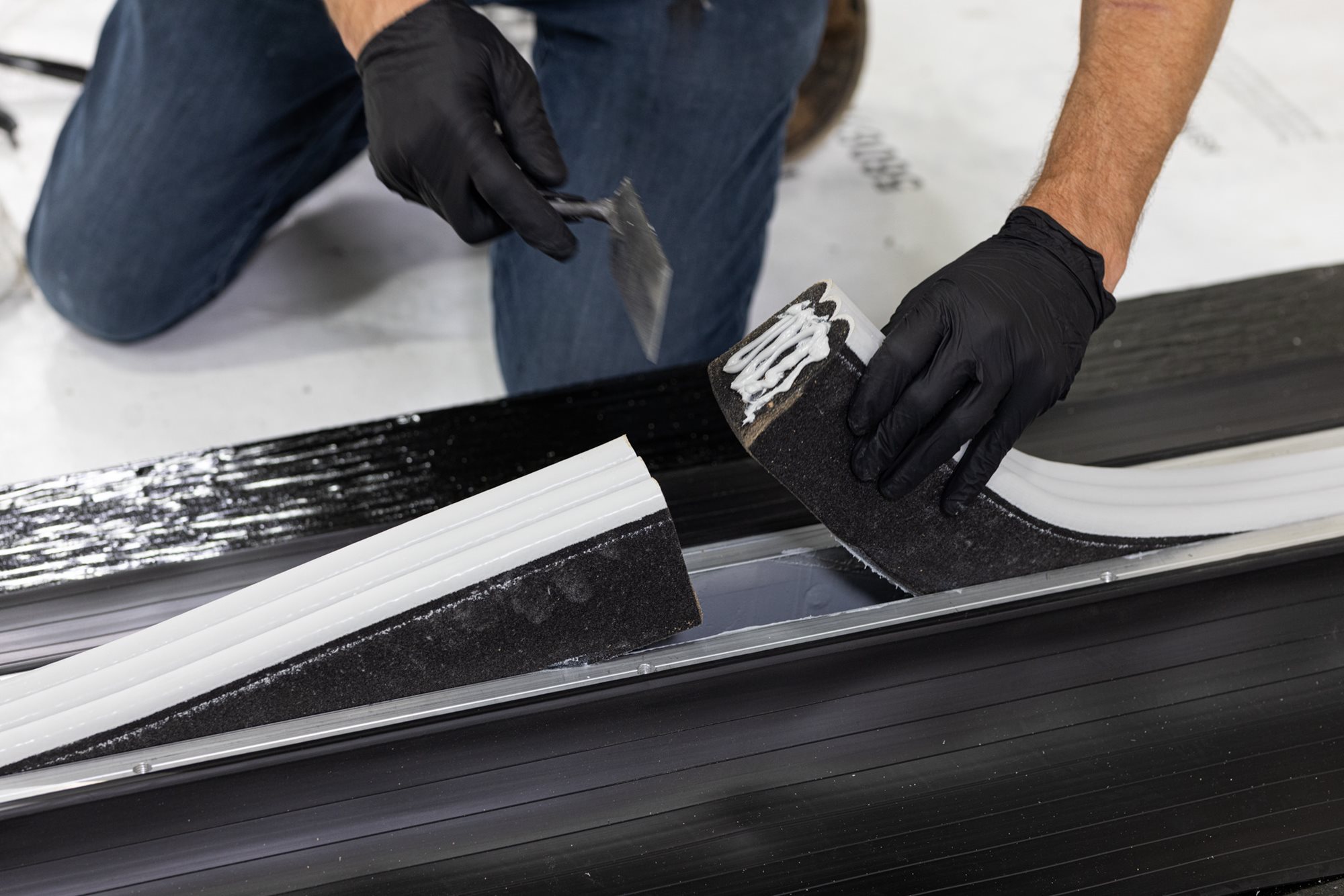 As the application of a paint or coating can restrict the air and moisture available to the sealant, the cure rate of any uncured portion of the sealant bead can be slowed or stalled. Because of this, it is recommended to allow full cure of the sealant bead prior to painting or coating.
Open-cell foam expansion joints are not considered paintable. Some closed-cell foam expansion joints can be painted or coated after installation; however, it is recommended to verify adhesion of the paint or coating through joint cycling prior to any coating. Some foam expansion joints may be coated with a factory-applied polyurethane face to allow for coating after application.
Exterior temperatures will influence the sealant technology best suited for your project. There is no hard and fast rule for this, but in high temperatures, acrylic and silicone sealants are recommended. If you’re looking at butyl, polyurethane and hybrid sealants, they can typically be exposed to high temperatures ranging from 150°F to 240° F (65°C to 115°C), but you should investigate an individual product’s chemical makeup before selecting them.
For cold temperature sealants, silicone, polyurethane, butyl or hybrid products with the right chemical composition can all be suitable. Keep in mind during application that extreme temperature fluctuations and precipitation could impact the product curing. Some sealants may be difficult to gun out in cold temperatures which could compromise the integrity of the joint. Check the product data sheets and installation instructions for recommended temperature ranges and any necessary accommodations.
The ambient temperature and humidity will affect the expansion rate of pre-compressed open-cell expansion joints. Colder temperatures and lower humidity levels will cause pre-compressed expansion joints to expand at a slower rate, while higher temperatures and higher humidity levels will speed expansion. Depending on job-site conditions, pre-compressed expansion foams can be conditioned prior to installation to slow or speed expansion as needed.
Sealants reduce airflow into and out of a building, which means they can also reduce the sound transmission. When choosing a sealant that can contribute well to acoustics, you want to look for a product that has a good sound transmission class (STC) rating. Effective sound dampening is less dependent on the sealant chemistry and more on the product quality and installation. The STC measures the sound transmission through a sealant joint and compares against a base wall with no joint openings. STC ratings can vary based on the wall tested, so it is important to look at the base wall configurations when investigating STC ratings. Foam expansion joints can also provide acoustical properties due to the increased depth compared to traditional backer rod and sealant.
 6. Sealant Movement
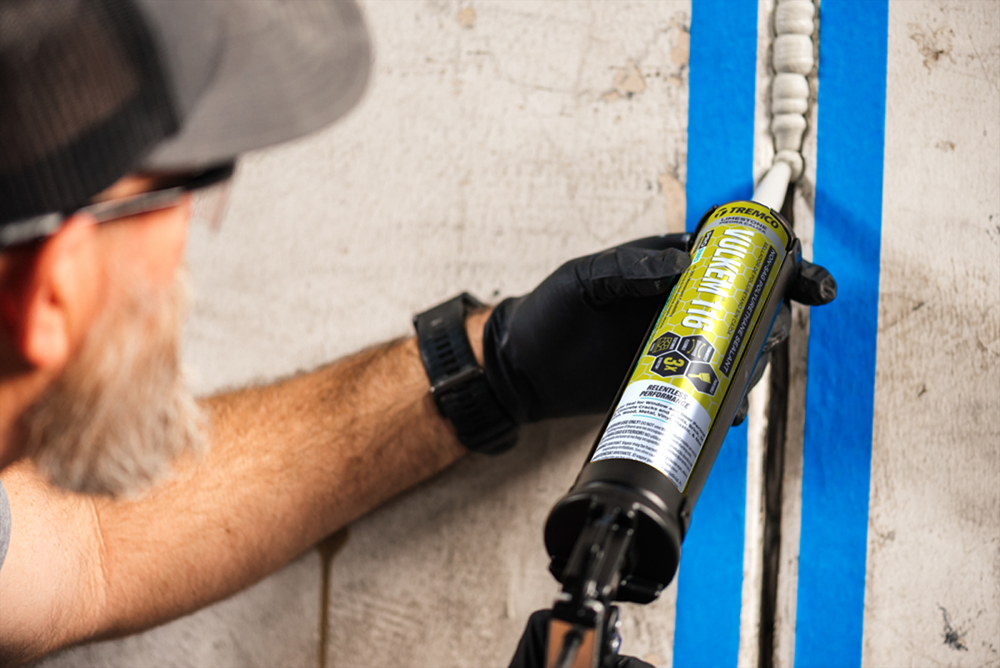
When thinking about anticipated movement of a joint, you want to have a sealant that can elongate and compress enough without disrupting the seal or adding unnecessary pressure on the bond line. High-movement sealants are necessary for joints that will experience a lot of movement in any direction.
The hardness of the material affects its flexibility or elasticity. A common property in building science is called a material’s modulus. The more stress or force required to stretch the sealant, the greater its modulus. A low-modulus or softer sealant is great for metal-to-metal or metal-to-glass connections. However, for structural glazing or sidewalk joints, less flexibility from a stiffer, high modulus material is preferred. For joints where you need high movement, look at polyurethanes, silicones and hybrids first, as acrylics and butyls lack the movement capability that the other options offer.
Foam expansion joints allow for rapid rates of movement and often come in two movement options. Pre-compressed open-cell foam expansion joints typically allow for ±50% movement, where closed cell foams offer ±25% movement. Due to the movement potential of foam expansion joints, many can be used along with a field-applied sealant bead. When using an open or closed-cell expansion joint in conjunction with a wet-applied sealant, the foam expansion joint should be positioned to allow for the proper sealant depth. This will ensure full movement potential can be achieved.
First off, adhesion and compatibility are two different variables that must both be factored into the equation. Just because two materials are compatible does not mean they will always adhere to each other. And vise versa. Read this blog post to learn more about how adhesion and compatibility impact connections.
It may seem obvious, but to create a long-lasting seal, you want to ensure that the sealant will adhere properly to the adjacent materials throughout the building’s lifespan. Therefore, selecting the best sealant for your project will depend on the substrate you are bonding to and what may be installed overtop of the sealant. Polyurethanes and acrylics are a great choice when needing to apply a urethane waterproofing membrane or coating over the top. For example, to act as a concrete sealant in a parking garage. Whereas when using a silicone sealant for detailing, the only technology that will bond to it is another silicone material.
When adhering to an existing membrane or coating, you will need to evaluate the adhesion of the existing membrane in addition to the sealant’s ability to bond to the membrane. Both are equally important as you do not want to cause delamination or premature failure of the seal.  Foam expansion joints, by design, rely on compression, rather than adhesion, for performance. Detail sealants and accessory materials used in the foam expansion joint system may require adhesion to a substrate or adjacent system, so adhesion testing is recommended prior to any accessory material installation.
In general terms, it is usually safe to assume that “like is compatible with like”. Meaning that urethanes are compatible with urethanes, acrylics are compatible with acrylics and silicone sealants are compatible with other silicone-based materials, like other sealants or glass. Even still, you need to ensure that the sealant meets your other project criteria. That is why it is important to do product specific testing to find the right sealant that accommodates all your performance needs.
Selecting the right sealant for your joints is a critical step in ensuring the longevity of your building envelope. By carefully considering factors such as water exposure, UV resistance, movement, adhesion and compatibility, design and construction professionals can make informed decisions that minimize failures and reduce maintenance needs. Remember, thorough research, product testing and mockups are essential to confirm the sealant’s suitability for your specific application. With the right sealant and proper installation, you can enhance the resilience, energy efficiency and air- and water-tightness of your structure.